The Power of Content Pillars and EEAT in an AI-First World

Although the online landscape is changing, SEO is still an important part of capturing organic traffic and leads. As AI-driven search engines and AI tools prioritize depth and credibility over traditional keyword density, SEO (now “Search Everywhere Optimization”) has become integral for real estate businesses.

Driving traffic to your Renaissance website through Google and AI
In order to continue to drive traffic and rank (both in search engine results and in AI), it is essential to have strong content across interconnected platforms. Let’s learn more about how your website is still relevant and how content pillars help build robust, reliable content ecosystems that satisfy both human readers and AI algorithms.
Table of Contents
Content Pillars: A Quick Breakdown
In the world of Search Engine/Everywhere Optimization, the phrase “content pillars” is not a new concept. To put it simply, content pillars are a network of interlinking pages/videos/etc., on your site and social media, and it is through supporting content that search engines assign authority.
In order to rank within search engines, specific keywords would be interspersed within your content, with subpages (supporting pages) linking back to the main page. This interlinking structure is instrumental to telling Google (or other search engines) that your website is an expert on the topic.

Real Estate Webmasters' Content Pillar structure
Content pillars are a simple concept. You begin with a main page with your main keywords inserted on-page and within backend features. Once your main page is built out, you then create nested subpages that “support” your main content, in similar topics. For real estate websites, you might begin with “Nanaimo real estate” as your main page, then create linked subpages focusing on “condos for sale in Nanaimo”, “homes for sale in Nanaimo”, “waterfront properties for sale in Nanaimo” and so on.
From here, you can create other supporting pillars—videos, blog posts, resources, and other forms of content—to link around on various platforms.
Why EEAT Is Important
So what is EEAT and why is it important? Part of SEO is that it is always, constantly changing and evolving. Old tactics don’t always work well anymore—especially as AI becomes a prevalent player for finding information.
EEAT stands for Experience, Expertise, Authority, Trust. These are the metrics by which your site is evaluated as a resource to rank for—especially for AI platforms. In practice, scoring high on these means that your site ranks higher and appears more frequently, even for new pages that you’ve made. To to make it simple:
- Experience: Real-world insights and first-hand knowledge
- Expertise: Demonstrating deep understanding of a topic
- Authority: Being recognized across the web
- Trust: Consistency, accuracy, and credibility

Understanding the E-E-A-T framework
Even though AI is emerging as a major player, content on your website and content pillars still matter. Keyword stuffing has long been a frowned upon practice, while content-thin pages, keyword targeting, and isolated blog posts don’t provide enough depth for AI or search engines to trust.
Why Your Website Still Matters (Even With AI Taking Over Search)
SEO for an AI-oriented world works pretty similarly to how it always has been. That is, focusing on developing quality content that is relevant for the clients you wish to attract through a content pillar strategy. Your website is not redundant with the prevalence of ChatGPT, Claude, Gemini, and other AI tools. In fact, SEO can be used to reach a wider audience than ever before.
In order to rank in AI, you’ll need to create a content ecosystem made possible by content pillars. AI looks at a wide range of sources, and that means your expertise needs to be demonstrated across a variety of places—your site, social media, blog posts, forums, and more.
There is a content diversity that is required that wasn’t as necessary before, but is instrumental to how these AI engines work. Creating a content “web” (as opposed to isolated pages hovering all alone) strengthens your authority by positioning you as a reliable source of information. This is a structure that Google and AI understands.
Migrating to an updated GKE site also is relevant. With an upgraded system and a wealth of tools at your disposal, you will be able to create valuable content that follows the EEAT model.
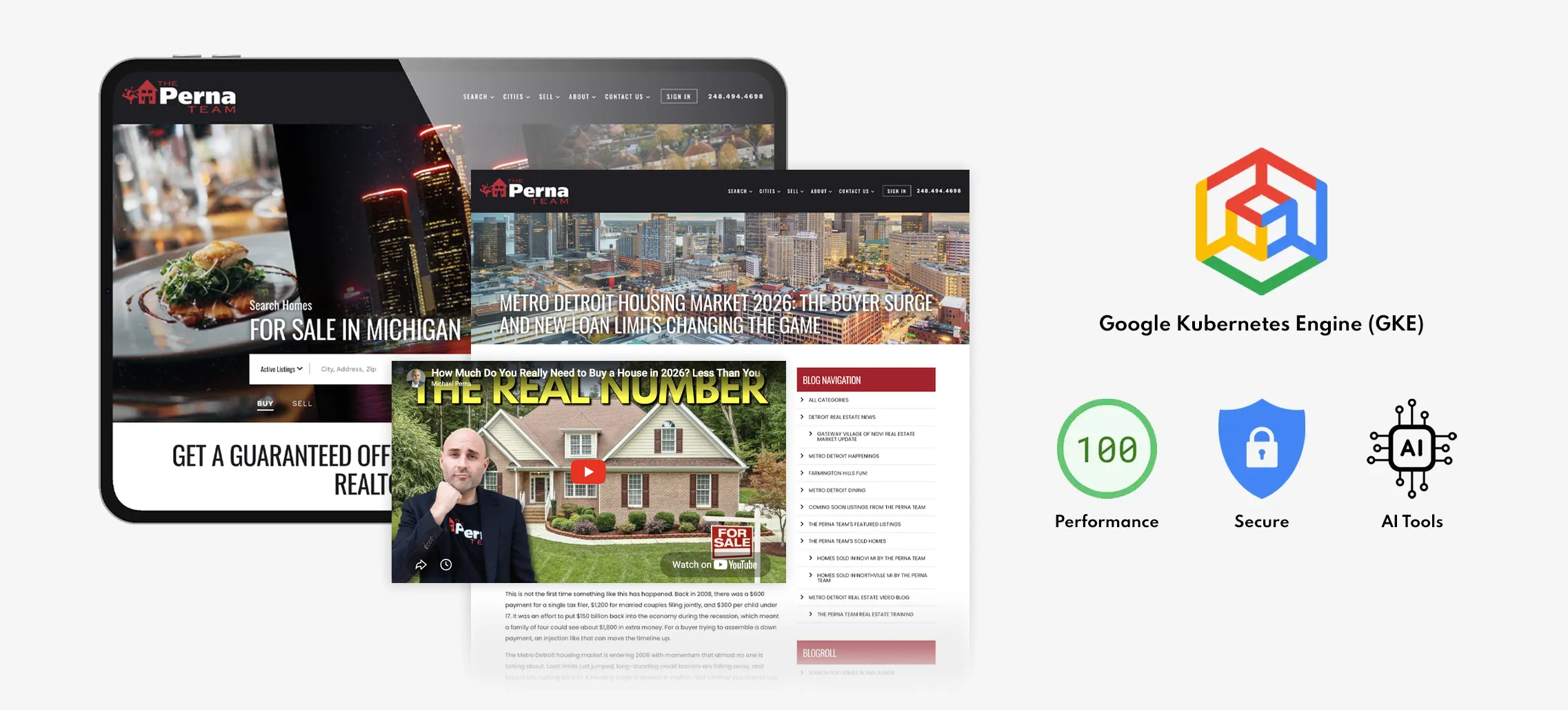
The benefits of upgrading to the latest GKE platform
Closing Summary
When trying to improve your results across AI tools, it is important to remember that depth is more valuable than volume. While it is recommended to have content spread across and linked around the web, it is far more beneficial to create a well-structured content ecosystem. Remember that Experience, Expertise, Authority, and Trust are the necessary components to ranking and capturing the leads that you want.
The Power of Content Pillars and EEAT in an AI-First World FAQs
What is a "content pillar"?
Content pillars, an SEO strategy, are a network of interlinked pages that support a main page of content. By design, content pillars stretch out like a web, which adds authority to the page that you would like to rank for.
What is "EEAT" and how does this benefit me?
EEAT stands for Experience, Expertise, Authority, and Trust. This is a strategy used to build authority, helping your site rank/pop up across multiple platforms (search engines, AI overview, and other AI platforms).
Does SEO still matter?
Yes. Even though we're seeing a visible shift in how people search for and find information, it also means that there are emerging SEO strategies geared towards appearing in AI results.