What On Earth Is Schema And Why Is It Important For My Website?

You’ve probably heard the word “schema” or the phrase “schema markups” around, and asked yourself, “what on Earth is that?” Perhaps you’ve even looked into it, saw a long string of code, and immediately closed the tab and moved on. Or maybe you’re familiar with the concept, but just don’t know where to start.

An example of schema markup for a blog post
We’re here to answer some of your questions and tell you more about what schema is and why you should be implementing it onto your real estate website—especially if you’re interested in AI search results! Let’s get started.
Table of Contents
What Is Schema?
To put it simply, schema (“schema markups”) is an “invisible” code that you place on your website’s pages that tells search engine and AI crawler bots more about your site. It is written in a markup language, hence its name, which is a type of coding/tagging dialect that communicates formatting. This code is only visible to crawlers, not to any of the visitors on your site.
For Real Estate Webmasters clients, this string of code is typically placed in the Head section of a page in the backend. Other website software might suggest pasting this within the body tags or within a specific widget that they have developed.
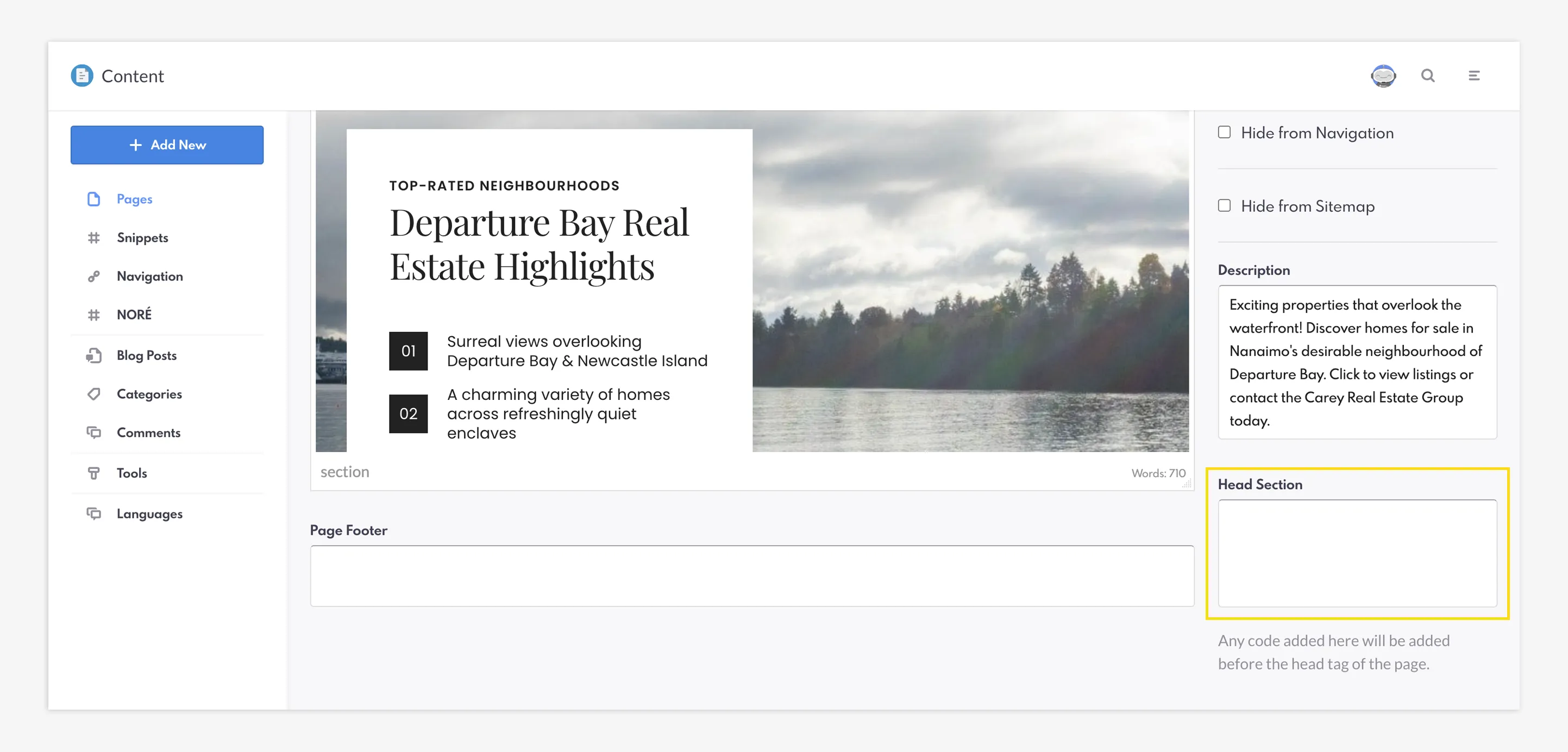
Paste your schema in the Head Section of a page
What Does Schema Do?
Of course, you’re probably asking yourself—so what? Why does any of this matter and why should I pour my energy into doing this?
Schema has a lot of SEO (and now AEO) value. We often recommend implementing schema markups onto your website because it provides search engines and AI tools with a quick, easy-to-read “summary” of important information on your page. Instead of having crawlers dig around aimlessly, schema markups “point” to the content you deem to be integral.
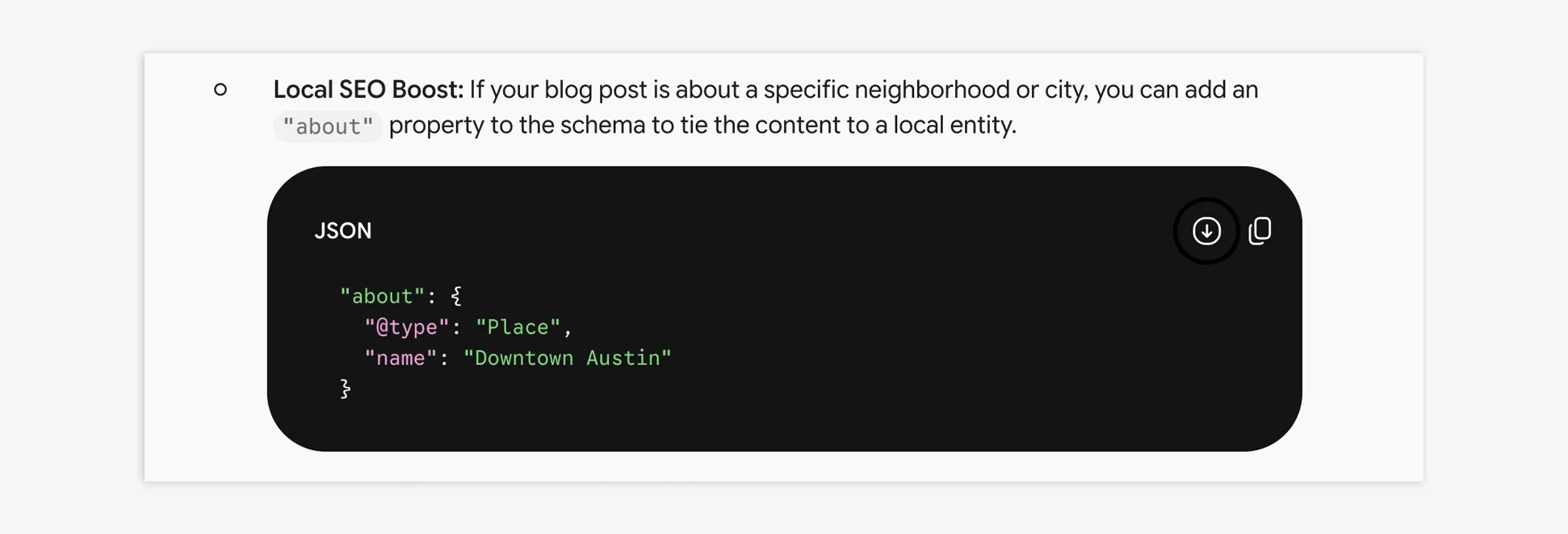
Add an "about" JSON to your schema to boost local SEO
By doing this, you have a better chance of ranking and showing up in results for the things that are actually a focus for your business.
Types Of Schema For Real Estate Websites
There are many types of schema markups, but not all of them are relevant for real estate websites. Overloading your site with schema that does not matter will not help you rank better—in fact, it will do the opposite. Stick to its intended purpose on your important pages and keep it targeted towards what’s actually on the page.
We briefly talked about the essential pages that you should have on your real estate website. We’ll build off of this for schema markups, breaking this down into your Home page, your community pages, and your blog posts.
On your Home page, you’ll want to place schema that addresses who you are as a business. Or, LocalBusiness schema. Specify that your business is real estate, and fill out pertinent information that search engines will want to know: your business name, URL, any images, location, business hours, and social media links.
Your community pages (or other significant content pages on your website), if optimized correctly, should have FAQs. You’ll want to place FAQ schema on these pages, improving your chances of appearing within the answers section of search results.
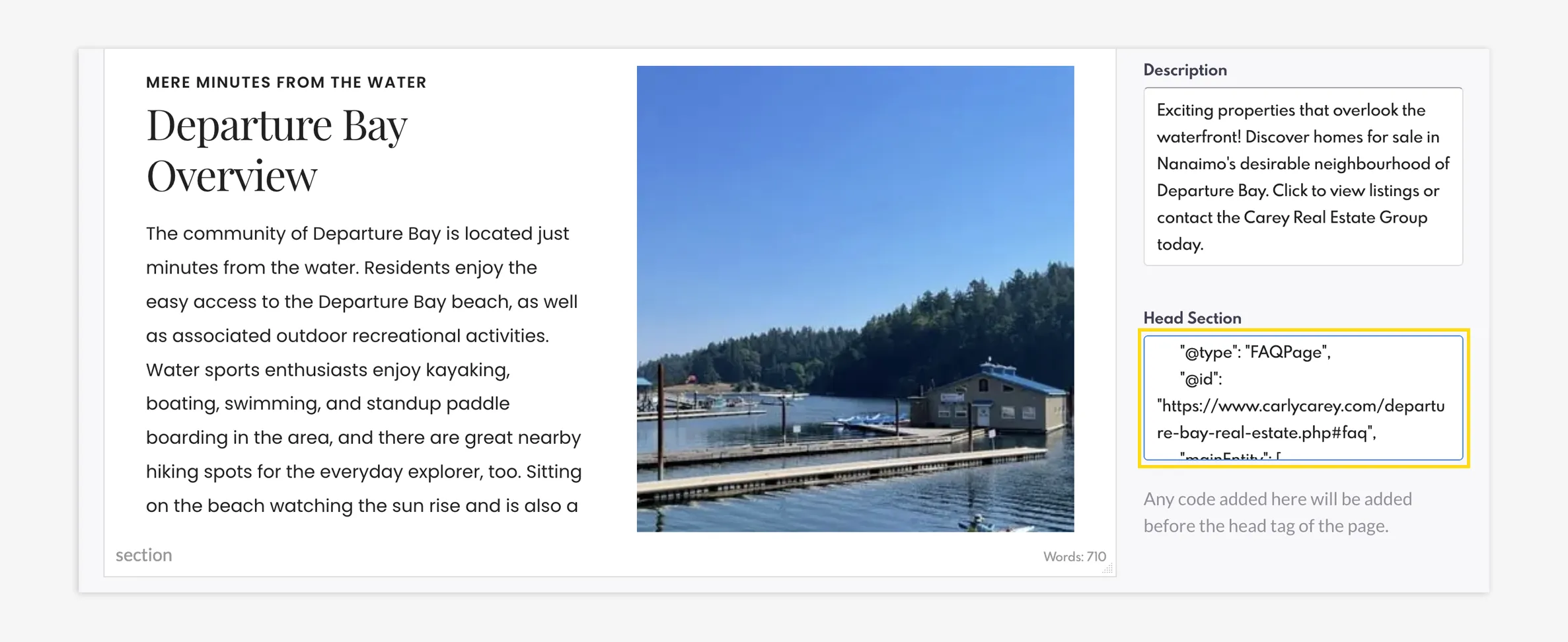
Apply FAQ schema on community pages to improve search results
BlogPosting schema should go on each individual blog post, with the purpose of providing a quick overview: the date posted, images, author, and summary.
Additionally, for those with complex sites (for example, those with a lot of pages and subpages), the Breadcrumbs schema might be beneficial for illustrating the structure.
How Do I Write Schema Markups?
You don’t need to be an expert in markup language or basic coding to be able to implement schema on your site! There are a multitude of free generators (and tools to check if your code is valid) online for you to use.
However, these tools can sometimes be difficult to navigate, or can take up time that you do not have—as generators require you to manually input all of the information within the text fields. Real Estate Webmasters clients can use REWpert, our AI assistant, for generating schema. Simply type in your prompt, such as, “Please generate FAQ schema using the existing FAQs on my community page, linked here.” Then, paste this code into the Head section of your page.
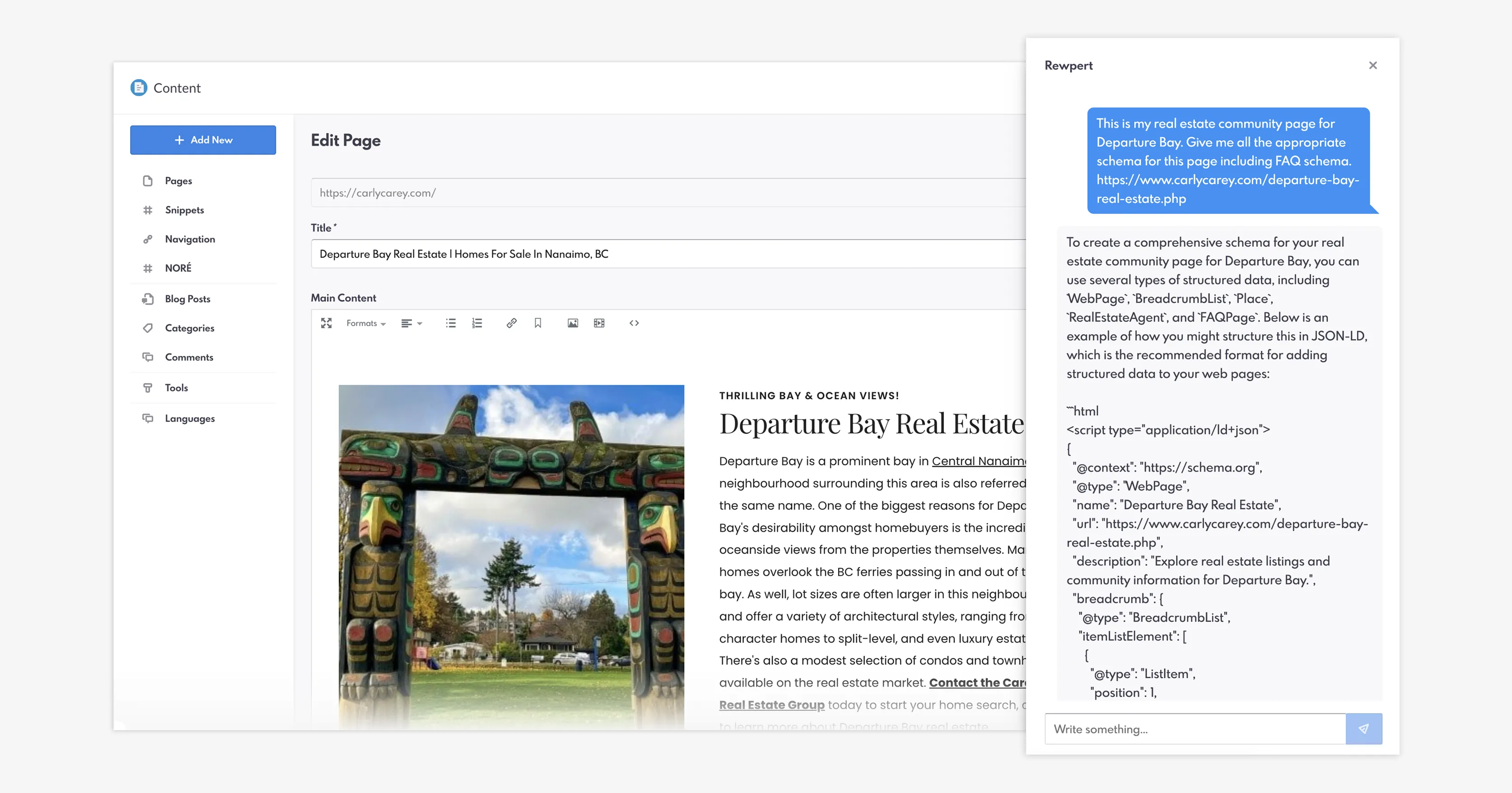
Use REWpert to generate schema markups
While REWpert is quick and easy, this still might not be something you have the time to do. Our SEO team are experts in real estate schema and can implement this for you, as well.
Closing Summary
Schema markup is a powerful way to enhance your website's search engine visibility and support AI-driven search performance. By using targeted schema types, you ensure search engines and AI tools properly understand your content.
Whether you build these markups using free online generators, leverage our AI assistant REWpert, or rely on our team of SEO experts, implementing schema is a crucial step toward optimizing your real estate website!
What On Earth Is Schema And Why Is It Important For My Website? FAQs
Can I have multiple schema types/code on one page?
Yes, you can have multiple schema types on one page, but this is only recommended if these are both relevant.
Is there schema specifically for AI?
Yes and no. All schema technically works for AI, though there is not one specifically for AI Crawlers. However, Real Estate Webmasters offers an llms.txt file feature for this purpose.
Are markups the same as Markdown?
Not really. Markdown is a type of markup language, and the way the code is written is different to the code written for schema markups.
Does every page on my website require schema?
No, this is not necessary. Keep schema to your most important pages. This will also save you time!